
Football match time duration is one of the sport’s most frequently misunderstood structural elements — a 90-minute framework that routinely extends well beyond its nominal endpoint through stoppage time, and a knockout resolution mechanism in extra time that adds another 30 minutes when regulation cannot separate the teams. The precise rules governing how long a football match lasts, when time is added, and how extra time in football operates differ across competition formats and have undergone meaningful changes in recent years. Sports analysis platforms and digital media covering match data, timing statistics, and competition formats — including dedicated betting app coverage of live match events — rely on accurate time duration data as a fundamental layer of all match reporting and statistical analysis.
Standard football time duration is 90 minutes divided into two 45-minute halves, with a half-time interval of typically 15 minutes between periods. This structure applies across professional football at every level — from grassroots fixtures to FIFA World Cup finals — with the same basic framework governing the official match clock regardless of competition. The complications that make football match time duration more complex than a simple 90-minute countdown involve the addition of stoppage time at the end of each half, the conditions under which extra time is played, and the specific rules governing what happens when extra time itself cannot determine a winner.
Stoppage Time: Where the Additional Minutes Come From
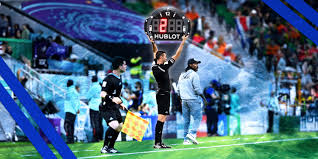
Stoppage time — also referred to as injury time or added time — is the period added to the end of each 45-minute half to compensate for time lost during the match through specific categories of delay. The fourth official displays the minimum added time on an electronic board in the technical area at the end of each half; the referee retains discretion to extend beyond this minimum if further delays occur during the stoppage time period itself.
The official categories of time loss that generate stoppage time under the current Laws of the Game are:
Substitutions — each substitution is assigned a standard time value. Multiple substitutions in a single stoppage generate proportionally more added time.
Assessment and removal of injured players — time spent on the pitch treating or removing injured players is calculated and added. This category has become more significant as players are more frequently assessed for concussion and other injuries with medical staff entering the field.
Time-wasting — deliberate delays at restarts, goalkeepers holding the ball for extended periods, and other tactical time-wasting actions are recorded and added to the stoppage time calculation.
Goal celebrations — excessive celebration time is added, particularly for late goals where players spend substantial time celebrating before the restart.
VAR reviews — time consumed by video assistant referee reviews, including pitchside monitor checks, is added to the stoppage time total.
Disciplinary procedures — time spent showing cards, managing player confrontations, and dealing with on-field incidents is incorporated.
The increase in average stoppage time across major competitions has been substantial in recent years. Prior to stricter implementation guidelines issued by FIFA around 2022, typical stoppage time in a professional match averaged 3-4 minutes per half. Following enforcement changes that prioritised accurate time compensation — particularly around goal celebrations, substitutions, and VAR reviews — average stoppage time across the Premier League, World Cup, and other major competitions increased significantly, with second-half stoppage times of 8-12 minutes becoming routine rather than exceptional.
Football Match Time Duration Across Different Formats
| Competition / Age Group | Standard Duration | Half Duration | Half-Time Interval |
| Senior professional (FIFA / UEFA) | 90 minutes | 45 minutes | 15 minutes (max) |
| Under-17 international | 90 minutes | 45 minutes | 15 minutes |
| Under-15 international | 80 minutes | 40 minutes | 15 minutes |
| Under-13 (varies by association) | 70 minutes | 35 minutes | 10–15 minutes |
| Under-11 (varies by association) | 60 minutes | 30 minutes | 10 minutes |
| Futsal (FIFA) | 40 minutes | 20 minutes | 15 minutes |
| Beach soccer (FIFA) | 36 minutes | 12 minutes | 3 minutes |
Youth football applies reduced match durations to account for the physical development stage of the participants — the framework is consistent in its two-half structure but scales the duration to appropriate physical load levels. Futsal and beach soccer operate under entirely separate timing rules that include stopped clocks in certain situations, producing a fundamentally different time management dynamic from standard football.
Extra Time in Football: When and How It Applies
Extra time in football is an additional playing period used exclusively in knockout competitions when the score is level at the end of 90 minutes of regulation play. The purpose is to determine a winner without immediately resorting to a penalty shootout — providing 30 additional minutes of play during which a goal can settle the tie.
Extra time consists of two 15-minute periods played in continuous succession with a short interval between them — typically one to three minutes, during which players may receive tactical instruction and brief physical recovery. The half-time break format applies: teams change ends after the first period of extra time, and play continues for the second 15-minute period regardless of the score.
Substitution rules in extra time vary by competition. Most competitions permit one additional substitution during extra time beyond the standard five allowed in regulation — creating a total of six possible substitutions across the full match including extra time. Teams that have used all five regulation substitutions before extra time began cannot take advantage of this provision; those who have conserved changes can introduce a sixth player specifically for the additional period.
Goals in extra time count equally to goals in regulation — there is no golden goal rule operating in mainstream professional football. The golden goal concept, which ended the match immediately when a team scored first in extra time, was trialled in international competition during the 1990s and early 2000s but was abandoned following criticism that it discouraged attacking play — teams became overly cautious, fearful of conceding the decisive goal, producing conservative extra time periods contrary to the entertainment intent of the rule.
The silver goal rule — which ended the half of extra time if a team was leading after the first 15-minute period — was briefly implemented as a compromise between the golden goal and standard extra time but similarly failed to produce its intended effect and was removed from mainstream competition.
If the score remains level after extra time, a penalty shootout determines the winner.
Extra Time Scenarios and Progression Rules
| Match Situation After 90 Minutes | Next Stage | Duration |
| One team leads in single-match knockout | Match ends — winner advances | 90 min + stoppage time |
| Level in single-match knockout | Extra time played | Additional 30 minutes |
| Level after extra time (single match) | Penalty shootout | Until winner determined |
| One team leads on aggregate (two-leg tie) | Match ends — aggregate winner advances | 90 min + stoppage time |
| Level on aggregate after two legs | Extra time in second leg venue | Additional 30 minutes |
| Level on aggregate after extra time | Penalty shootout | Until winner determined |
| Group stage match (all draws allowed) | Match ends — points shared | 90 min + stoppage time only |
Group stage and league competition matches do not use extra time — a draw distributes one point to each team and the match concludes at the end of regulation. Extra time applies exclusively in knockout contexts where a decisive result is required for one team to advance and the other to be eliminated.
The Half-Time Interval: Rules and Duration
The half-time interval is a formal break in play between the two 45-minute halves, governed by specific rules within the Laws of the Game.
Maximum duration is set at 15 minutes under standard Laws, though competition organisers may establish shorter intervals for specific formats or environmental conditions. The interval begins when the referee blows the whistle to end the first half and ends when the second half kicks off.
Referee authority to extend the half-time interval exists in exceptional circumstances — significant medical incidents, severe weather, or safety-related delays. Any extension requires communication to the competition’s match officials and organisers.
The extra time interval between the two 15-minute extra time periods is much shorter — typically one to three minutes — reflecting the physical context. Players have already completed 90 minutes of competition and the brief recovery window between extra time halves is primarily tactical rather than physical.
Stoppage Time Implementation: The 2022 Shift
The 2022 FIFA World Cup in Qatar marked a visible inflection point in how stoppage time was calculated and communicated. FIFA issued explicit guidance to referees instructing more precise and comprehensive tracking of time lost — resulting in second-half stoppage time figures of 8, 10, and in some cases over 14 minutes being displayed and played.
The rationale centred on genuine match time — the percentage of a nominal 90-minute match during which the ball was actually in play. Studies conducted prior to the 2022 World Cup found that actual ball-in-play time in professional football averaged between 55 and 65 minutes per match — meaning 25 to 35 minutes of nominal match time was being lost to various stoppages without equivalent compensation in added time. The stricter implementation aimed to bring effective playing time closer to the nominal 90-minute standard.
The response from domestic competitions was initially inconsistent. Some leagues adopted the stricter time-keeping approach immediately; others maintained existing practices while monitoring the FIFA initiative. By the 2023-24 season, most major European leagues had implemented tighter stoppage time calculation, with average added time across top competitions remaining higher than pre-2022 levels even after the initial adjustment period.
Criticism of extended stoppage time has centred on match management challenges — longer second halves compress recovery windows between matches in congested fixture schedules — and on the argument that extended late-match periods disproportionately benefit attacking teams at the expense of those attempting to protect narrow leads, potentially distorting tactical balance.
Football Time Duration in Historical Context
The 90-minute match duration is not a scientifically derived optimal figure — it emerged from the early codification of football rules in the 19th century and became standard through convention rather than formal design. The Football Association’s early Laws of the Game referenced match duration in terms of agreed time limits between competing clubs rather than a universally fixed period.
The 45-minute half became standardised across professional competition during the late 19th and early 20th centuries as the sport professionalised and uniform competition formats required consistent match scheduling. The adoption of 90 minutes as the global standard across FIFA-affiliated competition is one of the most consistent regulatory elements in international sport — maintained through over a century of competition at every level from local amateur clubs to the World Cup final without significant pressure for revision.
Proposals to introduce a stopped clock — pausing the official clock during all dead ball situations in the manner of basketball or American football — have been discussed periodically as a mechanism for guaranteeing consistent actual playing time without the variability introduced by stoppage time estimates. Implementation would produce consistently longer matches in wall-clock time given the volume of dead ball situations in a typical professional fixture, and the logistical requirements for stadium clock integration and broadcast production adjustment have kept the proposal at conceptual level rather than formal consideration within the Laws of the Game.
The football match time duration framework — 90 minutes of regulation, plus stoppage time accurately calculated, plus 30 minutes of extra time where required — remains the governing structure for competitive football worldwide, its longevity reflecting both the administrative inertia of a globally coordinated sport and the genuine functional adequacy of a framework that has produced competitive football at the highest level across more than a century of the professional game.